
By George Pu | Founder Reality Podcast | November 18 2025
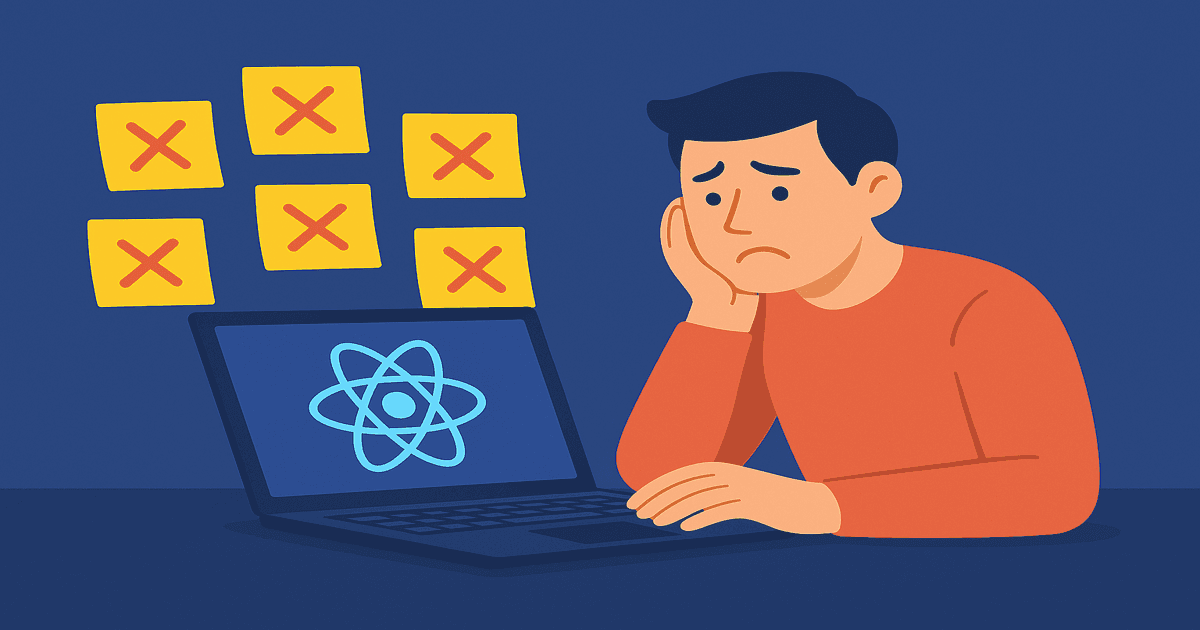
This morning on the subway, I failed six times in a row trying to debug React code.
Not because I was distracted. Not because I wasn't trying hard. I just genuinely didn't understand React state and rendering.
By the sixth attempt, I felt embarrassed - even though I was just talking to ChatGPT. No one was there to judge me. Yet I still felt stupid for failing so many times at something that should be "basic."
Then something clicked. On the seventh attempt, I finally got it right. Not because I memorized syntax, but because I actually understood what was happening.
It took 15 minutes total. Six failures and one success. And I learned more in those 15 minutes than I did in months of reading books, watching courses, and trying to force myself through documentation.
Here's why the entire education system is broken for builders, and what I'm doing instead.
The Problem: I've Been Forcing Myself to Learn Wrong
I've been trying to learn React and Next.js for months. I bought books. I read documentation. I enrolled in Frontend Masters - one of the best courses out there for frontend developers.
Every single time I opened a book or started a video, the same thing happened: I wanted to fall asleep.
Not exaggeration. Actual, physical drowsiness. My eyes would glaze over at code blocks and syntax explanations. Even in the morning, if learning React was the first thing I did, I'd feel drained for the rest of the day.
It brought me back to college. My first year CS courses where I struggled not because I couldn't learn, but because I had zero motivation to memorize syntax for programming languages nobody actually used.
I kept thinking: "Why is this the most important thing right now? We're all just trying to get internships and jobs. Why are we learning impractical stuff?"
I was the contrarian student who refused to learn the status quo. I did poorly on midterms and finals. For the longest time, I thought I was just bad at CS.
Until I got an internship and realized I was actually okay at computer science. The problem wasn't me - it was how I was being forced to learn.
The Same Mistake With Language Learning
I tried learning French the traditional way too. Enrolled in courses, followed structured curriculums, did passive exercises on Duolingo.
It worked better than React books, but something was still missing. I'd complete sections thinking "I got it," but then struggle with actual conversations or writing.
The traditional approach assumes everyone learns the same way. That we're all at the same level, with the same goals, needing the same structure.
But I'm not you. You're not me. We're at different stages of life with different contexts and needs.
A retired programmer learning a new framework has completely different needs than a founder like me who just needs to review code and make architectural decisions.

What I Did Differently This Morning
Last night, I decided to try something completely new. This morning on the subway, I opened ChatGPT on my phone and VS Code on my laptop.
I asked: "Can you give me React code examples with bugs? Let me try to debug them. If I fail, tell me what I got wrong and why. Give me multiple exercises until I understand."
The first exercise was about React state and rendering - something I didn't understand because I came from the old HTML/CSS/JavaScript world, not the React world.
Attempt 1: Wrong.
Attempt 2: Wrong.
Attempt 3: Wrong.
Attempt 4: Wrong.
Attempt 5: Wrong.
Attempt 6: Wrong.
ChatGPT would patiently say "George, you're close, but you're wrong" and explain why. After the fourth attempt, it even asked: "Should we move to section two where you learn the next fundamental?"
"No," I said. "I want to go back. I want to learn this. Give me another example."
It gave me six different code scenarios, all testing the same concept in different ways. I had to explain in natural language what was happening and what was causing the bug.
If this were a professor, they'd be pissed. "Next student." If it were a peer, they'd be dismissive. "You still don't get it?"
But AI doesn't judge. It just patiently explains differently each time until you understand.
On the seventh attempt - 15 minutes total - I finally got it right. And I knew I got it right because I actually understood what was happening in the code.
Why This Works: Active vs Passive Learning
Here's the difference between what I did this morning and traditional learning:
Traditional Learning (Passive):
- Read documentation about React state
- Watch video explaining rendering cycles
- Complete exercises the teacher designed
- Hope you remember it later
AI-Assisted Learning (Active):
- Look at actual buggy code
- Try to figure out what's wrong
- Fail, get immediate feedback
- Try again with different example
- Repeat until you actually understand
In 15 minutes of active debugging, I learned more than 30 minutes of a lecture could teach. Because I wasn't passively consuming information - I was actively engaging with real problems.
It's like the difference between watching language tutorial videos for 100 hours vs living in a country for three months. Immersion and active practice beats passive consumption every time.
The Curriculum Problem
Every education system - colleges, bootcamps, online courses, even Duolingo - uses something called a curriculum.
Curriculums exist because they scale. One teacher can teach 100 students the same material. One course can serve 10,000 people.
But curriculums assume everyone is the same. They're not.
In my consulting business ANC, we don't use curriculums. We do one-on-one because every founder comes to us at a different stage. One might be pre-idea, another at $100K MRR. You can't use one-size-fits-all.
The same applies to learning anything. Your context is unique:
- You're a designer who needs to understand how developers work
- You're a product manager estimating complexity for your VP
- You're a founder who wants to prototype quickly
- You're a student building side projects for your next job
Each needs a different approach. But traditional education treats everyone the same.
Why Structure is a Scam (Sort Of)
Everyone tells you that you need structure to learn effectively. Influencers, colleges, universities all say: "You need OUR structure."
The truth? Structure is valuable, but YOUR structure is not THEIRS.
Structures work when they're personalized to:
- Your current level
- Your goals
- Your learning style
- Your time availability
- Your context and needs
Generic curriculums are designed to sell you courses, not to optimize your learning.
The French Learning Breakthrough
I've been using Duolingo for French for 10 minutes daily. After 5 months, I tested at A2 level - saving myself $6,000-8,000 in French courses by skipping two full semesters.
But Duolingo was still passive. I'd complete exercises feeling like "I got it," but still had to do listening, speaking, and reading exercises for things I already knew.
Want the full playbook? I wrote a free 350+ page book on building without VC.
Read the free book·Online, free
With ChatGPT, I tried something different. I told it my level and asked for:
- 10 daily vocabulary words with testing
- Short paragraphs at exactly my level
- 5 questions to answer in French
- Corrections showing not just what's wrong, but how to reframe sentences better
The AI predicts what I don't know and addresses it proactively. When I submit answers, it says: "George, you got all five correct. However, punctuations are wrong. Here's exactly how you got it wrong. Here's how to reframe this sentence. In the future, if you want to say this, here's how."
It's not just testing what I know - it's teaching me what I'll need next.

My New Learning System: 15 Minutes Daily
Here's what I'm doing now for both React/Next.js and French:
Step 1: Pick Your AI
Free options: ChatGPT, Claude, Google Gemini, Hugging Face Chat, Meta AI, DeepSeek
Don't let cost stop you. All these models offer generous free tiers and work excellently for learning.
Step 2: Define Your Context
Tell the AI exactly what you need. This is crucial. Here's my actual prompt for React:
"I'm a founder trying to understand React and Next.js because my repos are built on them. I can read some code, but I fall asleep reading documentation or tutorials. I need to review code and make architectural decisions for my team. I'm not trying to write production code. I have 15 minutes per day. Please design daily debugging exercises for me."
For French:
"I'm learning French for work in Canada. I'm currently at A2 level (CLB 4-5). I have basic understanding but struggle with speaking, writing, and French accents. I have 30 minutes per day. Please give me daily reading and writing practice with corrections."
Notice how specific this is. Your role, your current level, your goal, your time commitment, your learning style preference.
Step 3: Commit to Daily Practice
Doesn't matter if it's 1 minute, 5 minutes, or 10 minutes. Just do it every day around the same time.
It's like Duolingo but personalized for you. Your pace, your goals, infinite patience.
I spend 15 minutes on React, 15 minutes on French. That's 30 minutes total daily. On the subway, before bed, whenever works.
Step 4: Embrace Failure
You will get things wrong. That's fine. AI will explain differently each time until you understand.
There's no shame in failing six times. Don't pretend you understand when you don't - it's AI, not a human. Be shameless in learning.
Don't move to the next topic just because you're frustrated. Make sure you actually get it before progressing.
Step 5: Track Progress
Every few days, ask: "Based on my progress this week, what should I focus on next week?"
Let AI adjust the curriculum to your learning pattern. This creates structure that actually works for you, not generic structure designed for everyone.
What This Means for Founders
I'm a founder, not a developer. I don't need to write production code. I need to:
- Review code my team writes
- Make architectural decisions
- Give feedback on implementation
- Understand enough to guide the team
Traditional courses assume I want to become a full-time developer. But I don't. My context is completely different.
With AI-assisted learning, I can focus on exactly what I need:
- Understanding React state management (done)
- Debugging common issues (in progress)
- Reading and comprehending our codebase (next)
No wasted time on syntax I'll never use. No forcing myself through 500-page books. Just targeted, active learning for my specific needs.
The College Realization
In college, I was afraid to ask questions. Everyone seemed so good at computer science and math. I didn't want to admit I didn't know something.
I wanted to be "George who knows everything." So I'd rather struggle silently than show intellectual humility and ask for help.
The fear of being judged by professors and peers stopped me from learning effectively. Even though most probably wouldn't have judged me, that internal fear was paralyzing.
With AI, that fear is gone. No judgment. No embarrassment. Just patient explanation until you understand.
That's revolutionary for learning.

Your Homework
Pick something you've been wanting to learn but avoiding because traditional methods don't work for you.
Open ChatGPT, Claude, or any free AI tool. Use this prompt template:
"I'm a [your role] trying to learn [skill] because [reason]. I'm currently at [level]. I struggle with [specific challenges]. I have [time] per day. Please design a daily practice routine for me that focuses on [learning style preference]."
Commit to 10-15 minutes daily for one week. Embrace failure. Track progress.
See if active, personalized learning works better than passive, generic curriculums.
I'm betting it will.
What I'm learning: React/Next.js (15 min daily) + French (15 min daily)
What are you learning? Let me know on Twitter: @TheGeorgePu
George Pu builds AI-powered businesses at SimpleDirect and ANC. Follow along for unfiltered founder insights at @TheGeorgePu.